So, you want lockdown to be over, America? These are the four things we need (#4/4)

We need antibody testing that can tell us who has been infected with COVID-19.

Due to America’s COVID-19 testing failure, no one knows how many of us have been infected with coronavirus. In my post on herd immunity, I described one reason why this is important. In that post, I wrote that the devastation that COVID-19 has wrecked upon NYC. At that time, only 1.4% of the population of NYC was confirmed infected.

Antibody tests now reveal that about 20% of NYC residents may have been infected with COVID-19*. That’s pretty astounding and shows just how inadequate our testing has been.

There are caveats to the sampling methods used in these studies that may have led to an overestimation of infection, which Governor Cuomo, to his credit, spoke about. There are also questions about the accuracy of the tests (this article has some great graphics and info). Cities around the world are rolling out antibody tests, though not quickly enough to meet demand.

Let’s say you manage to get one of these antibody tests, and it turns out you have antibodies against COVID-19. Does this mean that you’re immune to future infections? Unfortunately, we don’t know yet, and this is why the WHO recommends against using immunity passports.

Why, then, do I think antibody testing** is so important, even though I agree that issuing immunity passports is a premature idea?

Because we need to know our enemy. 

We don’t know the fatality rate of COVID-19, we don’t know how many asymptomatic cases there are, and, most importantly, we don’t understand whether we can become immune to it after infection, or how long that immunity lasts. Antibody tests can give us the answers to these questions, which are critical to regaining a functional society.

*This is still nowhere near enough to confer herd immunity to COVID-19. NYC would have to go through the hell of the last two months 3 to 4 fold over again, at least, before the city’s population would reach that point. 

So, you want lockdown to be over, America? These are the four things we need (#3/4)

We need to know if there any effective treatments for COVID-19

Because we lack testing and our healthcare system is overwhelmed, Americans with suspected COVID-19 are being told to self-treat at home rather than seek care. They are being instructed to take Tylenol for fever, drink plenty of Gatorade to stay hydrated and otherwise not leave their homes. No care packages are provided. Nothing other than palliative medications are typically being prescribed.

Although home is certainly more comfortable than a hospital, one downside of instructing sick Americans to self-care means that the American medical establishment can’t test anti-viral medications, supplements, or other medications on anyone in the beginning stages of the disease, and also can’t figure out how to improve treatment for cases who are not admitted to the hospital, many of whom still become very ill at home.

It means we can’t ask questions like, what causes mild disease to progress into a severe manifestation of COVID-19? What treatments work against COVID-19? When is the best time to administer these treatments, and in what combination?

The last question might be especially critical. Certain antivirals, like Tamiflu—a prescription medication for influenza, are only effective if given in the beginning window of virus infection. What if some antivirals are only effective against COVID-19 in that first asymptomatic yet contagious window? What if a different antiviral is only effective during a different part of the viral replication cycle? These could potentially be given as a cocktail to target the virus. Because they would be given in combination, there would also be an increased chance of evading viral resistance, which might develop to a single antiviral drug alone.

There are a number of antivirals that have shown some promise against COVID-19, including remdesivir and kaletra. When would be the optimal time for these to be given? And to whom should they be administered? Maybe a certain drug wouldn’t make enough of a difference for younger healthier patients, but could keep some high-risk groups out of hospital. Alternatively, maybe the side effect profile of many of these drugs would be too harsh for elderly patients with other underlying conditions but fine for those who are younger and healthier. These studies must be well-designed and systemic to tease apart the answers, and they should also be double-blinded. Our healthcare providers and clinical researchers must be provided all the support necessary to conduct these trials.

So far, the studies that have generated excitement have been too small to form a real basis for clinical care. Take the confusion around chloroquine, for example. Chloroquine is an anti-malarial that’s also been used to treat conditions like lupus and arthritis. However, President Trump touted it as a potential remedy for COVID-19 based on promising results from a very small study, and it immediately gained repute, even leading to hoarding by some with prescription pads. Could be that karma struck against those hoarders, because subsequent studies haven’t shown effectiveness for chloroquine against COVID-19, and some have even shown outcomes to be worse in the chloroquine than control groups. (Chloroquine’s side effect profile doesn’t look fun, either). But the hype still left desperate patients demanding chloroquine.

Another problem is that, right now, because there is not an FDA approved treatment for COVID-19, it is often the sickest patients who are granted ‘compassionate use exemptions’ and allowed to be treated with non-approved agents. This has emotional logic: we want to save the sickest among us, and when they appear to be failing, we want to do everything we can. There is also little risk of an experimental drug making things worse for someone who already seems to be dying. The problem with this approach is that, if you’re testing a drug on people who are already doing poorly, they may have worse outcomes regardless against the less sickly control group. This bias might lead us to throw out potentially useful drugs. Ideally, both groups of the study should be well-balanced in terms of factors like pre-existing conditions, disease progression, gender, and age. Given that no drug against COVID-19 seems to be emerging yet as a silver bullet, it seems time to move on from compassionate use to more clinically rigorous double-blinded trials including those testing potential combinations of therapies.

Right now, basically all we can definitively state regarding the treatment of COVID-19 is that President Trump’s suggestion to inhale or ingest Lysol or bleach is a bad idea. Sunlight is lovely but isn’t going to bring COVID patients back from the brink. Good lord. If we could cure disease by swallowing detergents and basking in sunlight, don’t you think we would have done so, maybe back around the year 1200 BC?  What exactly does Trump think biomedical researchers do all day?

Unfortunately, business and finance guys like Trump are running the country right now. They don’t seem to have a cohesive plan to fight COVID-19, and we need them to step things up, real quick. America needs its national agencies to get the funding and clinical trial infrastructure in place to figure out what (if any) existing treatments work, and how, when, and to whom they should be administered. I think it’s unlikely we’ll find a cure among existing treatments, but if they could decrease hospitalization rates, increase survival, or decrease viral shedding, it could be a huge component of our arsenal in the fight against COVID-19, buying us more time and saving more lives as we continue to work on a vaccine.

We need these answers sooner rather than later.

So, you want lockdown to be over, America? These are the four things we need (#2/4)

America needs a free and accurate COVID-19 testing infrastructure.

Apart from lack of PPE, another staggering feature of America’s cataclysmic COVID-19 response was our unique failure among wealthy first-world nations to identify and diagnose coronavirus cases. Unless you’re the only person in the world still gullible enough to believe this (oops, hi Trump 2020 voter, didn’t see you there…), you probably understand that it’s difficult to get tested for COVID-19 in the USA. We have the biotechnology and the talent to compete with any country in the world, yet our government stuck its head in the sand and utterly failed to provide the cohesive framework necessary to put our tech or talent to use.

Even today, test availability depends upon what state you’re in, what your profession is (understandably, healthcare workers and first responders are prioritized), how old you are, and what preexisting conditions you may have. Until March, the CDC only allowed testing of patients with a reported foreign travel history, even as COVID-19 spread like wildfire, seeding itself throughout America. I hope to God that the people responsible for America’s initial testing catastrophe will be held to task, but for now, let’s learn from this lethal mistake of under-diagnosis and not continue to replicate it.

The result of under-testing for COVID-19 in America was that we didn’t know where community spread was occurring in the USA until hospitals and nursing homes became overwhelmed with sick and dying patients. We still don’t know where new hotspots of community spread are emerging, and even within existing hotspots and surrounding areas many patients are being missed because of restrictions on testing.

Backlogs still plague the testing system. The tests being ordered by doctors and hospitals right now may or may not be accurate. As if to make up for their contemptible failure in January and February to approve even well-validated COVID-19 tests conducted by practiced research labs, the FDA now seems to be rushing to approve commercial COVID-19 tests that might not be accurate.

Because of the shortage of testing, we also can’t answer some very basic questions. For example, we don’t know when in the course of the disease patients should be tested for the most accurate results, we don’t have the testing capacity to retest patients with suspected false-negative results, and we don’t even know what the prevalence of false negatives is. Apart from possibly being denied care, another danger of false negatives is that people will assume they are negative even when they aren’t and continue to spread the virus. Some of these people could reenter their workplaces or be forced to return to work by their employers because they don’t have documentation of a COVID-19 positive test.

Imagine trying to fight fires without the ability to even detect smoke until entire towns are engulfed in flames. That’s what people who are demanding to reopen the economy without a COVID-19 testing infrastructure will force to happen. We need to test, isolate, treat, and repeat for all contacts of known cases. If we can’t do this, the disease, like wildfire, will continue to spread throughout our country, detected only when it burns down entire communities.

IMG_3076

So, you want lockdown to be over, America? These are the four things we need (#1/4)

20200423_111919.jpg

Personal protective equipment (PPE) and cleaning supplies

One of the most unconscionable sins of America’s COVID-19 response has been the lack of protective gear for our caregivers, resulting in an untallied number of illnesses and deaths of healthcare professionals. These are tragedies. And many could have been avoided with proper PPE, making it all even more heartbreaking.

Healthcare workers are doing heroic work. Personally, I have no idea how they cope and continue onwards. But here’s the thing. We should not be forcing our healthcare workers to martyr themselves. American medical professionals and their families did not volunteer to be exposed to such a deadly and contagious pathogen as COVID-19 without adequate personal protection. Medical workers should be treated and protected like the professionals that they are, not be thrown out there like cannon fodder. Being caring, decent, and knowledgeable are prerequisites for any good caregiver; being a martyr is not.

I heard about people in NYC applauding medical workers at 7PM, as the shift changes. It’s an important expression of appreciation and support. We’re all grateful, humbled, and stunned at the bravery and compassion shown by front-line workers.

But I’m also ashamed. I feel like we’ve sent our medical workers into a machine gun fight armed with their little more than their bare hands. DIYing it with garbage bags. PPE is such a basic healthcare provider need– how was there not enough by March? We’d had months of warning! How is there still not enough?

I’m just so, so sorry.

The shortage of PPE spilled forward onto other professions when the CDC instructed Americans en masse in January, February, and March not to buy masks or any other PPE*. These federal directives left many critical workers completely and utterly unprotected, even as their jobs caused them to be exposed to high levels of viral load. Public transportation workers seem to have been hit especially hard. I dare you to watch this video and not cry, knowing he died of COVID-19 not long after filming it. RIP Jason Hargrove. I’m so sorry. Why didn’t we do more to protect you?

Uber and Lyft drivers also seem to have been struck particularly hard. Police officers, too.

Then there are the other essential workers, the ones who often work part-time without benefits, who are still performing low wage jobs that require them to be face-to-face with hundreds a day, or to clean up after the rest of us. The grocery store workers, check-out clerks, housekeepers, and trash collectors. Many were sickened by COVID-19 before any of our country’s execs and higher-ups showed the modicum of common sense or compassion needed to allow their employees to enact even extremely low-budget protective measures like tape on the floor (which shows a safe distance for customers to stand), hand sanitizer, or disinfectant wipes. Many are still being sickened.

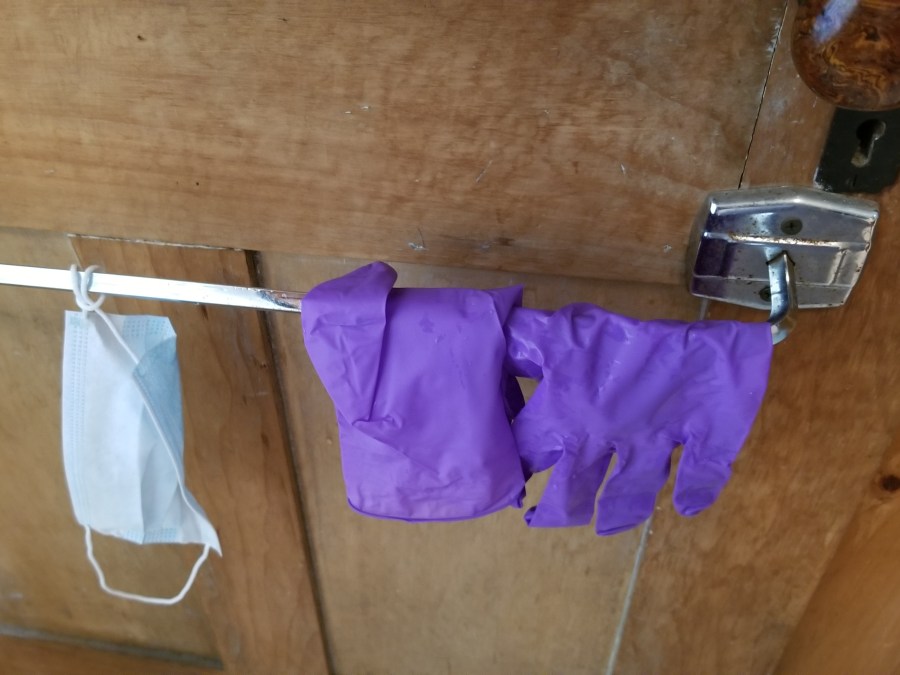
For the rest of us, even as we’re being told to keep and care for our sick family members at home, it’s still nearly impossible to get the gloves or masks or disinfectants we need in order to do so. And yet, we’re being told that, in short order, we’ll somehow all get back to our regular lives, with no provisions being given regarding whether or how PPE and cleaning supplies will be available.

So, listen up, all you economists, politicians, protesters, and thought leaders, you want America to go back to work? COVID-19 is dangerous but we aren’t powerless, and the first things we need are cleaning supplies and PPE. All of us.

*CDC directive was not changed until April.