Why is the CDC planning to recommend that COVID-positive people return to schools and workplaces?

The CDC recently announced plans to reduce the recommended isolation period after testing positive for COVID from 5 days to just a single day, regardless of whether you continue to test positive. This decision isn’t grounded in a scientific finding, but rather in the perception that people are missing work or school because they are testing positive for COVID, and that COVID tests (but not COVID itself) are the problem. There seems to be a belief at the CDC that ignoring COVID test results will somehow lead to fewer sick days for students and workers. CDC representatives voiced concern that workers are missing out on pay when they test positive for COVID and stay home, and rather than advocating for paid sick leave, the CDC, alongside the public health agencies and governors of (Democratic) California and Oregon are issuing new guidelines to go to work, school, shopping, restaurants, etc., while knowingly contagious and testing positive for COVID. Masking recommendations remain unclear. So, people are going to find themselves in situations where they’re expected to be present despite being ill, potentially endangering others.

So, if future you gets sick with COVID and needs to take two weeks off because you sat next to a sniffling, sneezing, coughing colleague who tested positive for COVID the day prior, or if your asthmatic kid contracts COVID from a deskmate at school who was sent to class despite a positive COVID test– don’t be mad at them. They would be following the CDC’s new proposed recommendations to the letter, which are to come to work or school unless you have had a fever (defined by the CDC as a temperature of 100.5o F or higher) in the past 24 hours. CDC officials say that they want to bring their recommendations around COVID in line with existing recommendations about flu, and to treat COVID more like the flu and other respiratory illnesses. 

However, creating an equivalency between COVID and flu is misleading. Reasonable precautions against spreading the latter will not be effective for the former. Flu is characterized by rapid onset of a high fever, back and body aches, sore throat, cough, chills, and other symptoms. You can be contagious the day before symptoms start, and are most contagious the first 2-4 days you’re sick. Once your fever has been gone for 24 hours, there’s little chance of spreading the virus. COVID, on the other hand, presents with a wide spectrum of symptoms that only sometimes includes a clinical fever. Your first symptoms of a COVID infection can range from a runny nose to sore throat to vomiting or even neurological problems like dizziness and vertigo. You can be very contagious for 2-3 days before feeling sick, and it’s pretty common to remain contagious for 10 days, or even more, after symptom onset. Unlike the flu, where contagion risk diminishes once the fever subsides, COVID remains highly contagious even without fever. Thankfully, the development of affordable at-home COVID tests allow people to test to see if they have COVID when they’re feeling unwell, even if they don’t have a fever, and a positive test is a decent way to estimate if you’re contagious. Ignoring COVID test results and relying on fever as a determinant of contagion will almost certainly lead to increased spread of COVID. 

COVID and flu differ in a number of other important ways as well. COVID is 2-3 times more contagious than the flu. And about 4 times the number of people died with COVID vs flu in the  2022-2023 flu season. It seems like this will be the case for this year as well (recent weeks have seen about 500-700 deaths per week with flu, compared with about 2000-2300 with COVID).

Additionally, a frequent complication of COVID is Long COVID, a chronic condition that can be disabling, even for young and previously healthy people. Data indicates that 7% of Americans have experienced Long COVID– that’s over 20 million people. 

I’m one of them. Long COVID derailed my life after I contracted COVID in March of 2020. I work today with other people who have Long COVID, and I wish I could say that vaccination eliminates the risk of Long COVID, or that no one gets Long COVID from Omicron strains of the virus– but this just is not true. There are new people developing Long COVID and reaching out for help every day, even now, even people who have been vaccinated or who have fully recovered from previous COVID infections. The CDC knows this.

COVID isn’t the first or only infectious disease that causes long-lasting illness or disability. I grew up around older family members who spoke about diseases like polio, whooping cough, typhoid, lockjaw, scarlet fever, mumps, and measles. They spoke of victims and survivors of these in the same tones as they spoke of the world wars. The loss and devastation that followed these infections was measured not only in deaths, but in lives characterized by the abrupt onset of chronic illness and disability following infection. They wondered sometimes why they had been spared when their loved ones had not.

Me with my great-great-Aunt Mabel,
who was born in 1899.

The development of the vaccinations and treatments that have largely eradicated these plagues from America seems now to have had the unfortunate side effect of having also eradicated lived knowledge of the prevalence of serious post-infectious conditions. For many Americans the flu is the only infection they have lived experience of prior to COVID, and so it’s the only COVID comparison they reach for, as inaccurate as it is. Public health agencies, however, should know not to do so.

The CDC has not yet officially released these guidelines; I still hope that more rational thinking and evidence-based policies will prevail. Throughout the history of public health, successful control of pathogens has relied the use of all the tools provided by science, and gaining public trust through steadfast communication of accurate scientific guidance. It’s important to continue to do so now.
Yes, you can get COVID multiple times. What does that look like?

For many viruses, once you have had it once, you can’t get it again. After I experienced disabling long-term effects from my first COVID-19 infection in the spring of 2020, I really hoped that this would be the case with COVID.

Unfortunately, we now know that it’s not only possible but commonplace to become reinfected with COVID-19. The immunological landscape created by COVID-19 looks less like one-time viruses like measles and more like COVID’s immune-evasive cousins, the coronaviruses that cause common colds.

“Learning to live with the virus” without mitigation measures means that most of us will be infected with COVID multiple times, particularly if you live, work, or attend school in a congregate setting.

But what are the long-term effects of multiple COVID reinfections? Are reinfections typically milder than a first bout with COVID? How do reinfections affect people who already have Long COVID?

These questions and more about reinfections are yet unanswered. Even though the risk of reinfections is high, we lack data on their outcomes.

I’ve been working with the Patient Led Research Collaborative (PLRC) to tackle this problem, and we’ve recently gone live with a survey we designed to look at how COVID reinfections impact long-term health outcomes.

The survey is fully anonymous and is open to anyone worldwide. You don’t need to have Long COVID to participate, you don’t need any medical records or tests, and you don’t even need to have ever had COVID. In fact, if you’ve managed to evade the virus thus far, your responses will serve as very important controls.

Those under 18 years old will need a parent or guardian to help complete the survey, but we welcome and invite everyone to take the survey. Everyone’s experience matters.

As an additional incentive, US residents who take the survey before 5/20 can enter in a drawing for three $100 Amazon gift cards.

You can take the survey in English by clicking directly on this link. The survey is also currently available in Chinese, Spanish, French, and Portuguese.

We don’t have the answers to the questions about reinfections yet, but with your help, we will get there. Please take the survey here to help us figure out the impact of COVID reinfections.

Participate in patient-led COVID-19 research

Over the course of my healing journey from COVID-19, I joined a number of patient support groups. One of these groups was Body Politic’s online Slack group. Out of this group, a patient-led research collaborative was born, and I’ve recently become involved with this group and the exciting work that they’re doing.

One current project is survey-based and asks the question of whether vaccination can help those like myself who are struggling with lingering symptoms from COVID-19. Some Long COVID patients have spoken out about symptom improvement following vaccination and some preliminary survey data supports this. Our survey aims to follow up on these reports with more in-depth questions to help identify which symptom clusters might improve (or worsen) following vaccination, whether this effect is transient or endures, who might benefit, and which vaccines might be most helpful. This survey was designed by individuals who are struggling themselves with Long COVID– something I think is key to designing perceptive and insightful questions.


We are looking for responses from people who are at least 5 weeks out from having received the second dose of COVID-19 vaccines (or 5 weeks past the only dose in the case of single-shot vaccines like Johnson & Johnson).


We’re looking for responses from everyone who has been vaccinated– whether you’ve had COVID or not, whether you are a COVID long-hauler or were one of the lucky few who recovered without symptoms, we would appreciate your responses to the survey. Your participation will help contribute to better understanding of long COVID. https://patientresearchcovid19.com/.


Can herd immunity protect us from COVID-19?

I was recently forwarded an internal email where a ‘thought leader’ at a scientific institution called the hope that we wouldn’t all become infected with COVID-19 naïve and suggested reopening the economy sooner rather than later so that we’d start to build herd immunity.

I’m also hearing the term herd immunity coming out of the mouths of politicians worldwide—usually, again, in the context of the economy.

It’s time to do the damn math. Are most of us really going to get COVID-19? Or can we deliberately expose/infect enough younger healthier workers so we can restart the economy and have herd immunity work to protect the most vulnerable against this disease?

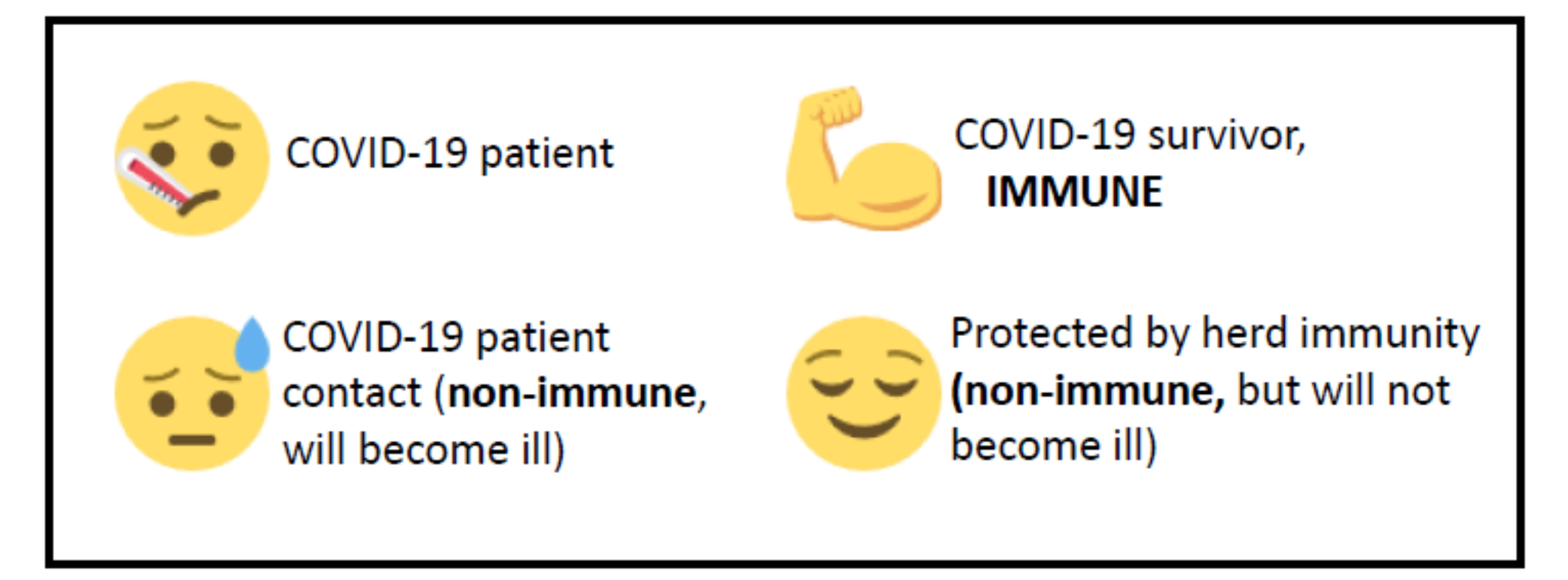
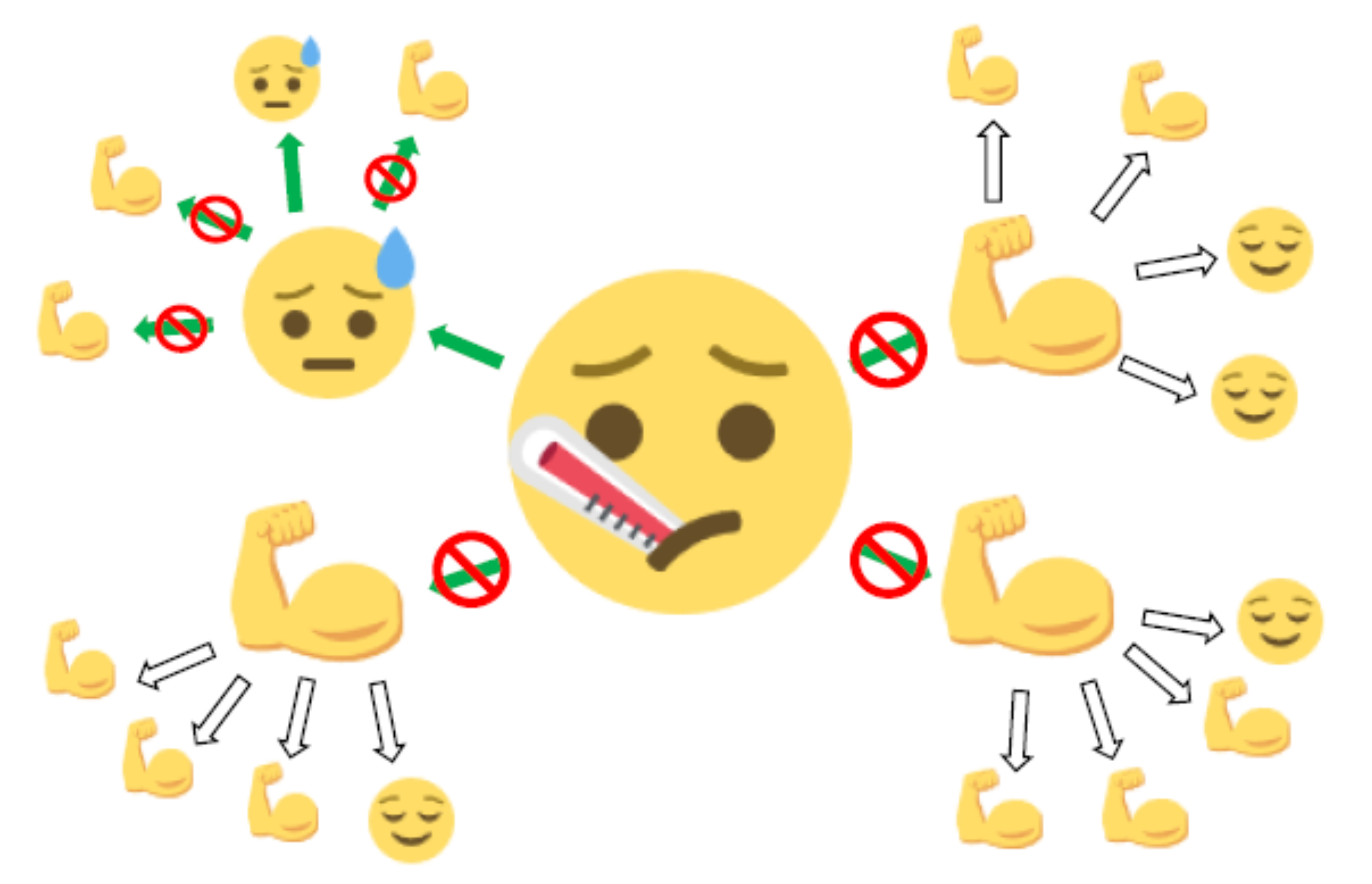
Herd immunity happens when there are enough people within a society who are immune to an infectious disease so that it can no longer spread efficiently. 100% of people don’t need to have been infected/immune for herd immunity to happen. Depending on how contagious a pathogen is, once a population hits 60-80% immunity, herd immunity will begin to protect all members of society, and will decrease disease spread. The more contagious a disease is, the more people must be immune to it for herd immunity to start to protect even those who were never infected themselves. Here’s my diagram of this:

panel 1
Viral transmission when no one is immune. Green arrows indicate infection spread.

figure legend

Panel 2
Viral spread when 75% of the population is immune. Green arrows indicate potentially infectious contacts. Viral transmission is blocked when some people are immune. Downstream viral transmission then also does not occur where it would have otherwise (clear arrows)

OK, so herd immunity sounds pretty good, right? It works pretty well for other diseases, helps limit spread of the flu, and herd immunity even protects the poor children of idiots who choose not to allow them to get safe and effective vaccines against dangerous pathogens like measles (even though unvaccinated individuals themselves are not immune). Because COVID-19 is so contagious, ~80% of the members of society will need to have survived COVID-19 before herd immunity will significantly protect us. What will it take for 80% of us to have infected/recovered from COVID-19?

Let’s do the math. We’ll use the numbers coming out of New York City for this example. As of 4/16/20, there have been over 120,000 confirmed cases* in this outbreak epicenter. Over 12,000 deaths. That’s a lot.

But in a city of 8.7 million, 120,000 is only 1.4% of the population.

Only 1.4% of the population is confirmed ill with COVID-19, and hospitals look like war zones.

1.4%, and mass burials are happening.

1.4%, and refrigerated trucks are humming on the city streets where they’ve been used for weeks as morgues.

1.4%, and medical caregivers are experiencing unprecedented levels of burnout—and sometimes becoming infected themselves and, in far too many cases, dying.

1.4%, and NYC area hospitals are completely overwhelmed with COVID, jeopardizing patients with other healthcare needs.

1.4%, and the economic heart of America has stopped beating.

This is what it looks like when less than 2% of the population of a single American city becomes infected with COVID-19.

Can you imagine what it would take for 80% of the population to become infected with COVID-19 across the USA**?

Even if the human costs are acceptable to the powers that be, how long would it take to manage the slow burn necessary to keep the infection rate to a level our healthcare and funeral systems can cope with?

I hope our ‘thought leaders’ and politicians do the damn math sooner rather than later. To me, the numbers are screaming that planning on any degree of herd immunity to COVID-19 is the ‘naive hope’.

We simply can’t succumb to COVID-19. We have to work together to continue to beat back this disease through continued social distancing, aggressive diagnosis, improved treatments, and, ultimately, hopefully, vaccinations– which represent our only true hope for herd immunity.

It’s gonna hurt, economically. But we just have no other options yet against the living nightmare that is COVID-19.

* It’s true that confirmed cases underestimate the number of actual cases, due to lack of testing and/or false negative tests. Until a reliable antibody test is developed, we won’t know, and so I’m using the best data available. However, NY leads the country in testing, and even doubling the number of confirmed cases means that only about 3% of NYC residents have been infected, resulting in the catastrophic reality described above.


**For now, I’m not factoring in reports that some people seem to get reinfected with COVID-19—for this discussion, let’s say that once you’ve had COVID-19, you can’t get it again.